
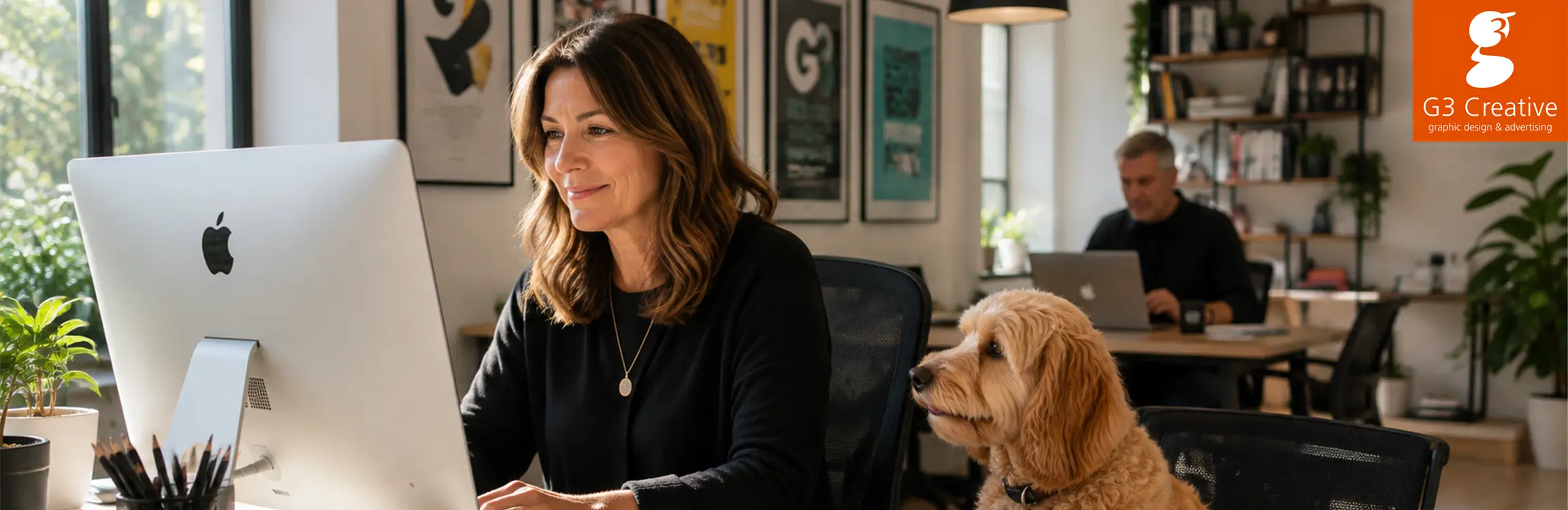
At G3 Creative, a Glasgow-based graphic design studio, we see creative direction as the discipline that turns good ideas into consistent, memorable brands. It applies whether you run a visitor attraction, a professional services firm, a product brand or a growing hospitality business. The principles don't change. Only the touchpoints do.
We've watched skilled teams deliver underwhelming design. We've seen photoshoots with healthy budgets produce images that feel flat — not because the people weren't capable, but because no one was steering the work towards a clear, coherent idea.
When the role of creative director first became common, it was easier to define: set the visual bar, protect the core idea, judge the work, and keep iterating until it landed.
Today, brands no longer live only in ads or brochures. They exist across products, social feeds, websites, physical spaces, sales decks, recruitment, customer service and countless micro-interactions.
That means decisions made in isolation — by marketing, product, HR, sales or social — can each seem reasonable on their own, yet collectively dilute the brand. Creative direction now has to connect strategy to execution, culture to communication, and commercial ambition to how the business actually behaves day to day.
When nobody is accountable for the brand as a whole, costs follow: extra rounds of revisions, wasted production, campaigns that fade quickly, and a brand that becomes less distinctive each time it speaks.
Craft and originality are usually the first to go. The safest option wins. Familiar references turn into imitation. Small compromises slowly erode the original idea.
Cut creative direction and you might save one fee — but you'll get less value from every pound spent on designers, photographers, filmmakers, writers and media that follows.
For a visitor attraction, that might show up as chaotic social ads, bland signage and leaflets that don't reflect the on-site experience. For a product brand, it's packaging that doesn't match the website. For a professional services firm, it's a pitch deck that feels like it belongs to a different company. The pattern is always the same: a brand that becomes harder to recognise and easier to overlook.
Creative direction is the backbone that brings all parts of a brand identity into a cohesive whole. In practice, that work spans:
Brand strategy and narrative — clarifying identity, values and mission; shaping a message that resonates with target audiences; aligning visual and verbal expression with business goals.
Concept and campaign leadership — developing big-picture ideas for campaigns, products or services; translating values into concepts that connect emotionally; directing the process from idea to rollout and measuring results.
Visual identity and application — defining logo, colour, typography and imagery; ensuring consistency across websites, social, print, packaging, advertising and physical spaces.
Tone, voice and messaging — setting how the brand speaks, whether formal, friendly, playful or authoritative; keeping tone consistent in web copy, ads, social posts, print and on-site communications.
Team coordination and quality control — leading designers, copywriters and marketers; facilitating collaboration; guiding art direction; troubleshooting creative challenges while staying true to the brand.
Cross-platform consistency and insight — ensuring a unified message and aesthetic across digital, print and in-person experiences; using audience research and data to refine approaches and keep the brand relevant.
Before we had Loch Katrine as a client, the destination had gained a rapid buzz after some TV exposure and travel influencer posts. Then it stalled: visitor numbers flattening, engagement dropping, and brand identity getting lost in a crowded market. Leadership knew something must change, but efforts felt scattered.
At Loch Katrine, visual and messaging inconsistencies were undermining its connection with customers. The relaxed, nature-led experience — cruises, eco stays, walks — contrasted sharply with chaotic social media ads, bland signage and poorly designed leaflets that lacked cohesion. Visitors began to lose sight of what the destination stood for.
That's when our creative director stepped in to unify the brand: aligning the nature-led experience with a consistent visual style, tone and messaging across social ads, website, leaflets, signage and on-site graphics. The result is a destination that feels cohesive and authentic at every interaction — making it easier for visitors to understand what it stands for and why it's worth choosing.
And now, at Loch Katrine, every touchpoint, from pier signage to eco-lodge brochures, shapes how visitors feel about the place.
If you're building or refreshing a brand, creative direction is not a luxury — it's the lever that multiplies the value of every creative pound you spend. It reduces rework, sharpens distinctiveness, and ensures that photography, illustration, copy, print and digital all pull in the same direction.
For Glasgow and Scotland-based clients, that often means grounding design in real place-based research — local history, landscapes and cultural assets — so the brand feels authentic and ownable, not generic. That's the kind of direction that helps brands stand out, turn interest into action, and build long-term loyalty.
Whether you're a visitor attraction, a cruise operator, a heritage site, an eco-lodge provider or an entirely different kind of business, the same logic holds. Direction is what makes the creative investment compound rather than leak.
If you'd like to explore how structured creative direction could strengthen your brand, get in touch with G3 Creative. We'll help you connect strategy, storytelling and design so every touchpoint works harder for your business.